What Shapes St. Simons Luxury Home Values Today
June 11, 2026
June 11, 2026
If you have ever wondered why one luxury home on St. Simons Island commands a much higher price than another just a few minutes away, the answer is usually more specific than square footage alone. In 31522, buyers are not looking at the island as one flat market. They are comparing access, setting, style, risk, and long-term ownership costs with a very careful eye. This guide will show you what really drives luxury home values on St. Simons Island and how those factors shape smart pricing. Let’s dive in.
The first thing to understand is that St. Simons Island behaves like a collection of micro-markets. April 2026 Zillow data put the 31522 Home Value Index at $685,979, while March 2026 Realtor.com data showed a $743,950 median listing price, 439 active listings, and a 97% sale-to-list ratio. Other reports from Sotheby’s and Redfin also landed in different places, but they all point to the same practical truth: broad island averages only tell part of the story.
For luxury sellers and buyers, that matters. A property in a beach-adjacent pocket, a club-oriented setting, or a marina-access location is competing in a much narrower lane than the zip code as a whole. That is why pricing and value on St. Simons have to be measured pocket by pocket.
Nationally, the luxury entry point sits around $1.2 million according to Realtor.com in 2026, while Redfin reported a U.S. luxury median sale price of $1.39 million in the three months ending April 30, 2026. On St. Simons, many properties fall into a premium local category even when they sit closer to entry-luxury by national standards.
That distinction shapes buyer expectations. A seller may own a standout island property, but the asking price still has to make sense to a buyer who is comparing it not only to nearby homes, but also to broader luxury alternatives. In a selective market, value has to be clear and well supported.
On St. Simons Island, location is the strongest value separator. Buyers consistently pay more for homes that place them closer to the beach, the village, or boating access. Public amenities help explain why.
Glynn County and Golden Isles identify three public beaches on the island: East Beach, Massengale Beach, and Gould’s Inlet. East Beach and Massengale offer parking and restrooms, and Massengale also includes picnic areas, grills, and a playground. The island also has more than 30 miles of paved bike paths connecting beaches, the village, and historic sites, and Glynn County operates a public marina at Gascoigne Bluff.
The strongest premiums tend to show up in beach-adjacent and highly limited pockets. In March 2026, Realtor.com showed East Beach with a $2.892 million median listing price and $777 per square foot, with zero active listings at that time. That combination of price and scarcity says a lot about how buyers value direct access and a trophy setting.
Other premium areas also reflect the same pattern. St. Simons Beach showed a $1.2 million median listing price and $586 per square foot, while St. Simons Island Club came in at $1.55 million and $479 per square foot. By contrast, Hampton Point showed a $725,000 median listing price and $353 per square foot.
Sotheby’s Q1 2026 update showed North St. Simons at a $1.42 million median sales price versus $1.04 million for South St. Simons. That does not mean every northern property is worth more than every southern one. It does show, though, that setting and scarcity within the island have a real impact on price.
For you as a seller, this is why a zip-code average rarely gives a reliable answer. For you as a buyer, it explains why a home that seems similar on paper can command a very different number once access, surroundings, and scarcity come into play.
Luxury value is not just about the final number. It is also about how quickly the right buyer appears. On St. Simons, market speed can vary sharply from one pocket to the next.
Realtor.com showed St. Simons Island Club with a 111-day median market time and a 97% sale-to-list ratio in March 2026. East Beach, on the other hand, had zero active listings in that snapshot, reflecting a much tighter supply picture. Those differences matter because they show how buyer pools can narrow or intensify depending on location and property type.
In luxury pricing, the closest valid comparison is often the most valuable one. A home’s nearest competitive set may not be the island at large, or even the broader neighborhood name. It may be a small cluster of homes with the same beach access, similar views, comparable lot shape, or a similar ownership and lifestyle profile.
That is especially true on St. Simons, where access patterns and setting can change quickly from one street to the next. A strong pricing strategy starts with those micro differences rather than smoothing them out.
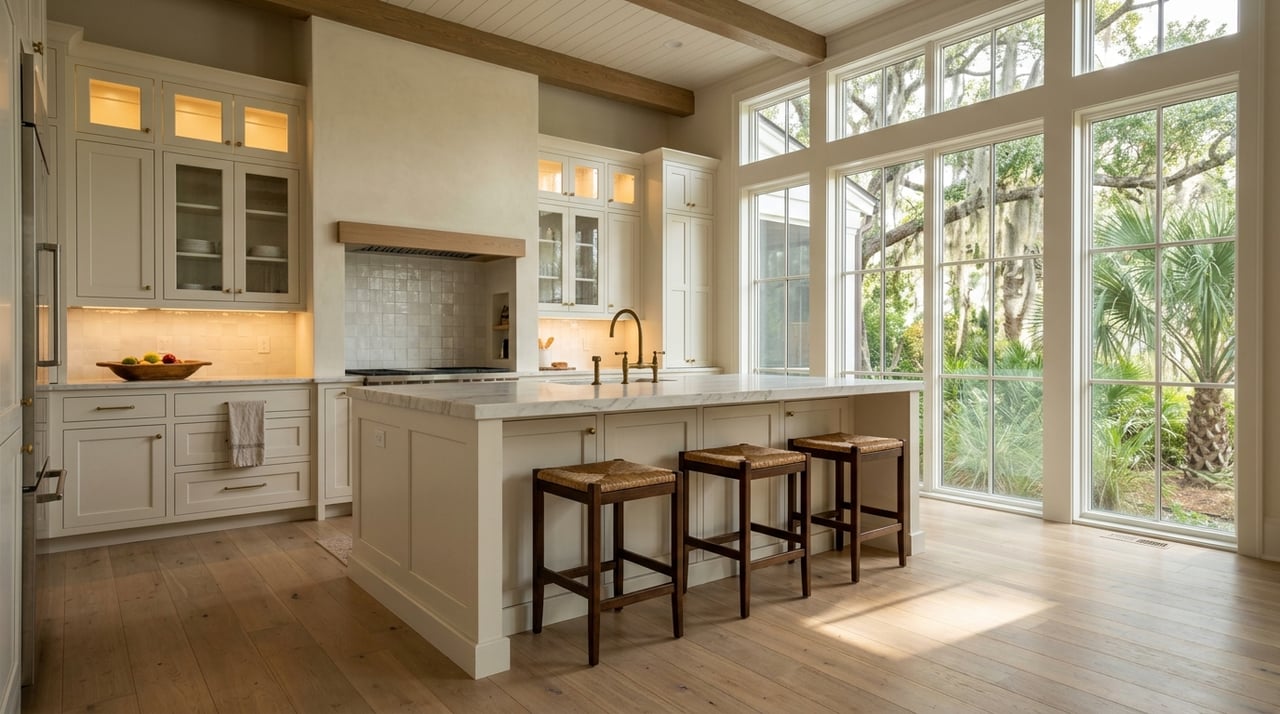
Luxury buyers on St. Simons are paying for more than updated interiors. They are also responding to whether a home feels right for the island. Architectural fit, lot configuration, and renovation quality all shape value.
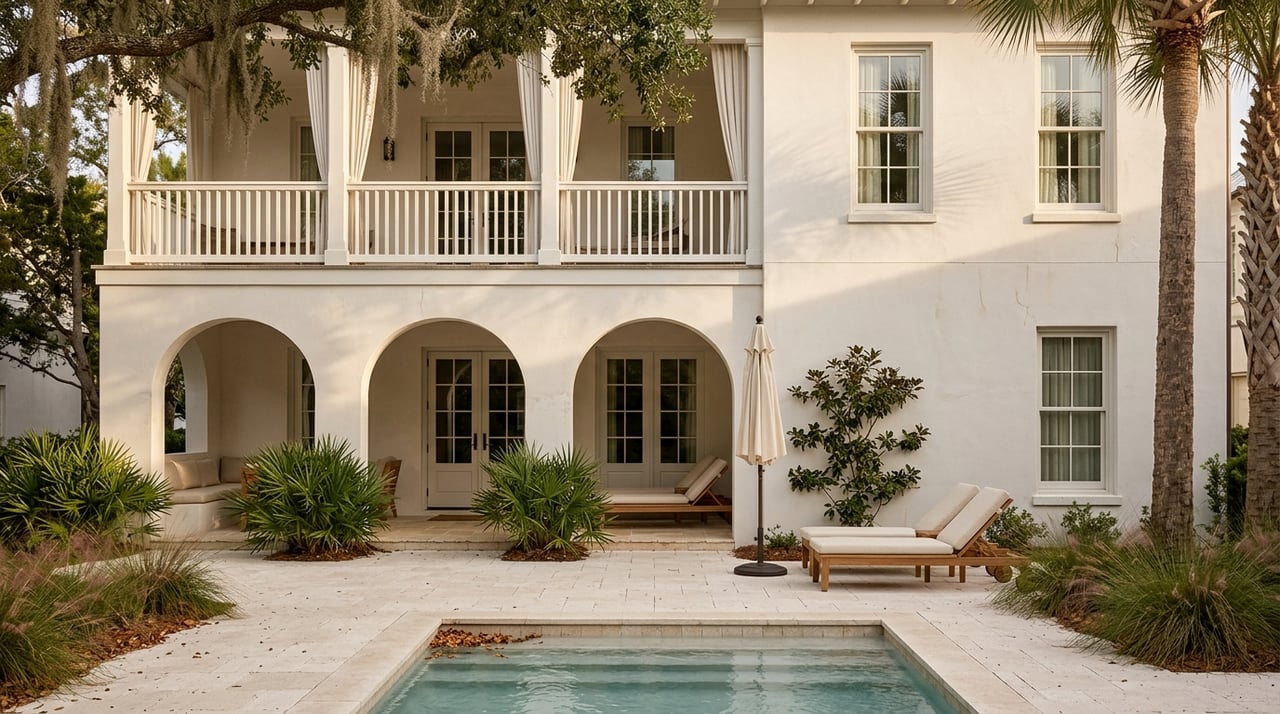
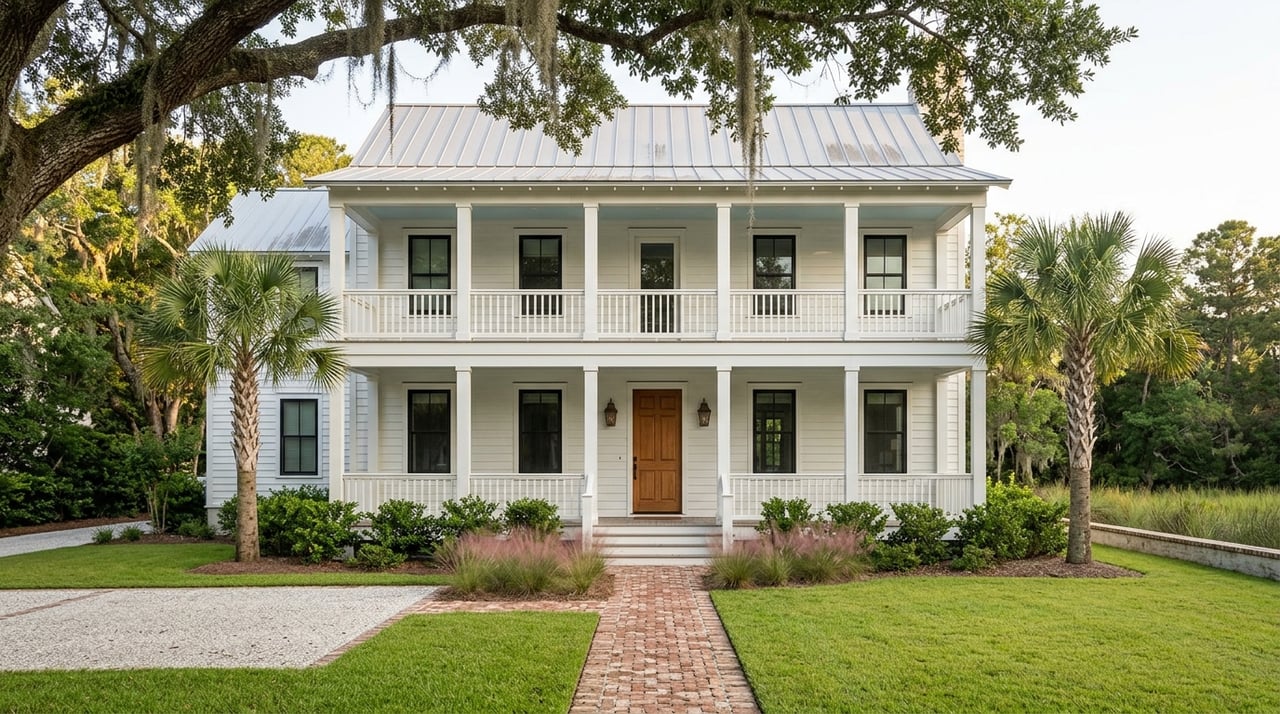
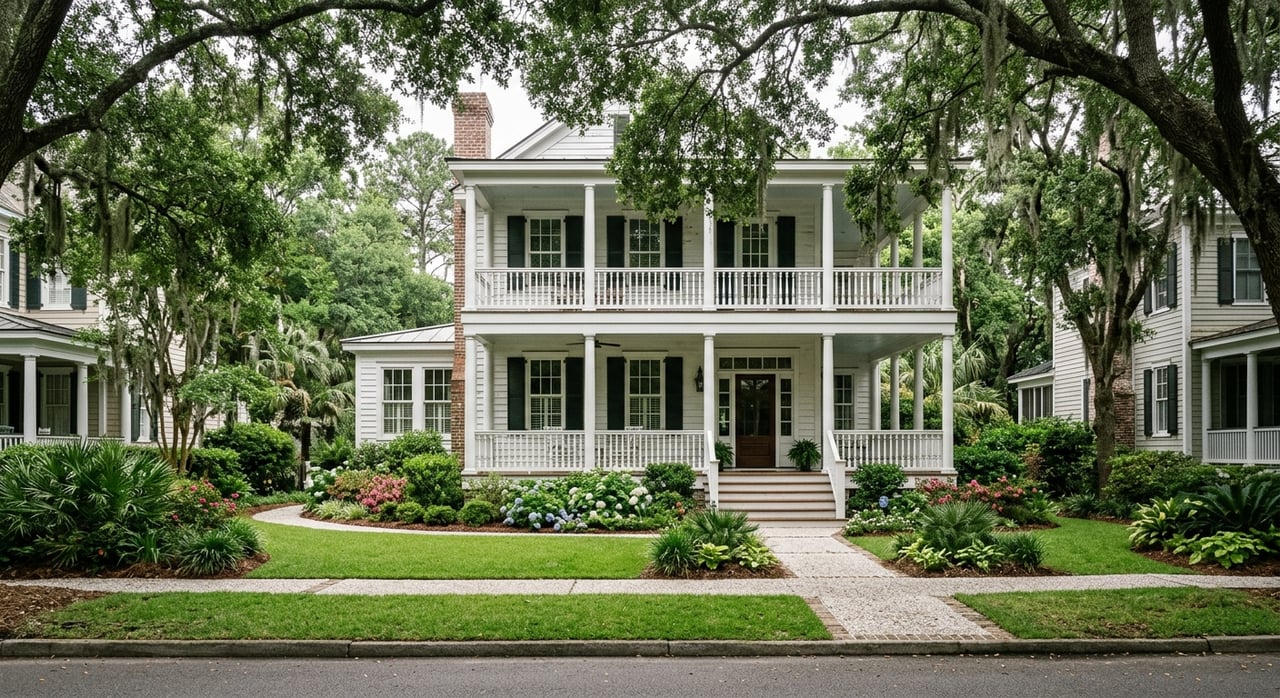
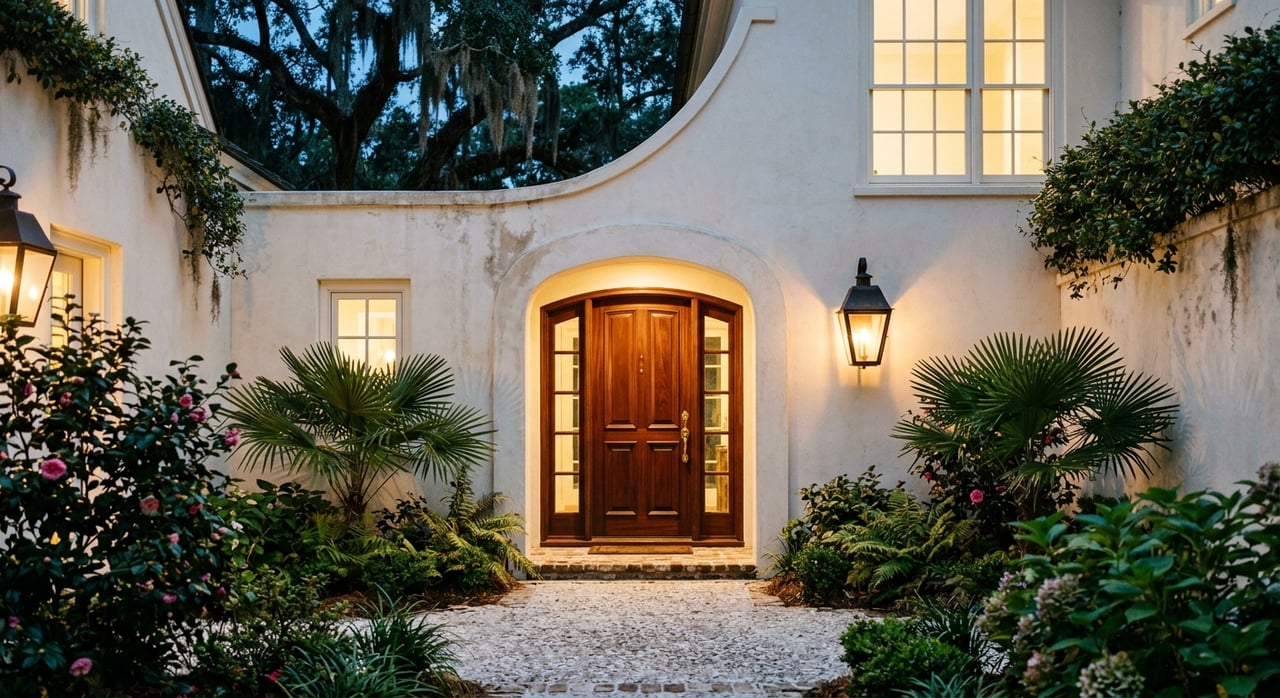
Frederica describes local homes as drawing from traditional Spanish architecture, including archways and red tile roofs, while also reflecting Southern Vernacular, Mizner, and Lowcountry influences. Coast Cottages highlights southern architecture with wide porches and brick-paved lanes. The New Georgia Encyclopedia also notes the long history of tabby construction in the coastal Southeast, which helps explain why coastal-historic details still resonate with buyers.
When a luxury home fits its setting well, buyers often see greater value in it. Porch scale, exterior materials, historic references, and thoughtful coastal design can all strengthen appeal. That does not mean every home must look the same. It means buyers tend to reward homes that feel authentic to St. Simons rather than generic.
This matters even more in areas where preserving character is part of local planning. Glynn County states that Village area rules exist to protect historical and architectural character and existing property values from incompatible designs. In practical terms, design choices can affect both marketability and pricing strength.
Lot configuration can carry as much weight as the house itself. Glynn County’s April 2026 zoning rewrite states that accessory dwelling units on St. Simons are allowed only on lots of one acre or larger and must still meet a 60% site coverage requirement.
That means usable lot size, expansion potential, and site limitations can change how buyers value a property. Two homes may look similar inside, but the one with more flexibility for future use or fewer site constraints may command a stronger price.
In a market that is stable but selective, cosmetic updates are not enough to guarantee a premium. Buyers are still paying close attention to quality, finish level, and whether the price is truly supported.
St. Simons Island Club homes sold for about 97% of asking on average in March 2026 and spent a median 111 days on market. That suggests buyers will pay for the right property, but they are not blindly chasing every listing. If a renovation feels surface-level or poorly matched to the home, that can limit pricing power.
On St. Simons, a strong renovation story usually includes real improvements that align with the home’s architecture, setting, and ownership costs. High-end finishes can help, but they matter most when they are paired with practical value and thoughtful design.
For sellers, this is where finance-grade pricing discipline matters. The goal is not to price based on money spent alone. The goal is to measure what the market is actually willing to reward.
A luxury waterfront or near-water setting can create a premium, but buyers also price in exposure and carrying costs. On St. Simons Island, flood risk, insurance realities, and shoreline conditions all play a role.
Glynn County states that homeowner’s insurance does not cover flood losses and that flood insurance is available through the National Flood Insurance Program. The county also notes that floodplain development requires permits and elevation certificates, and that substantial improvements can trigger new-construction-level requirements if costs reach 50% or more of market value.
These rules create real pricing differences. Two homes with comparable interiors may not hold the same market value if one sits higher, has lower flood exposure, or avoids costly compliance hurdles. Buyers in the luxury segment often look beyond finishes to the full ownership picture.
Glynn County also announced shoreline revetment rehabilitation along the oceanfront from Gould Street to Arnold Road in December 2025 to restore deteriorated sections affected by erosion and storm impacts. That kind of public work is a reminder that oceanfront value is tied not just to the view, but also to ongoing exposure and long-term maintenance considerations.
If you are selling in 31522, the most effective pricing plan starts with close micro-neighborhood comps, not broad averages. The spread between a $725,000 Hampton Point home and a $2.892 million East Beach home is simply too wide for zip-wide numbers to do the job on their own.
The most useful adjustments usually include:
Current negotiation patterns are just as important as asking prices. Realtor.com’s 31522 data showed a 97% sale-to-list ratio, while Redfin reported St. Simons homes averaging about 4% below list in its city data. Together with national luxury trends, the message is clear: this is a stable but selective market.
That means overpricing can cost valuable time and weaken momentum. Well-supported pricing, on the other hand, can protect both attention and leverage.
At higher price points, the buyer pool gets smaller and more discerning. That is why luxury value on St. Simons is created at the intersection of setting, style, scarcity, and manageable risk. The right strategy does not chase the highest possible list price in theory. It positions the property within the range the real market will support.
For sellers, that often means a more disciplined launch, stronger comp analysis, and marketing that presents the home with clarity and confidence. For buyers, it means understanding that a premium price should be backed by something concrete, whether that is location, design, lot quality, or lower ownership friction.
If you are thinking about buying or selling a luxury property on St. Simons Island, working with a local advisor who understands both island nuances and pricing discipline can make a meaningful difference. For a tailored, data-driven strategy, connect with Georgia Bailey Usry.
Georgia has achieved numerous accomplishments, primarily driven by her commitment to prioritizing her clients and maintaining a strong focus on building lasting relationships. Work with Georgia now!