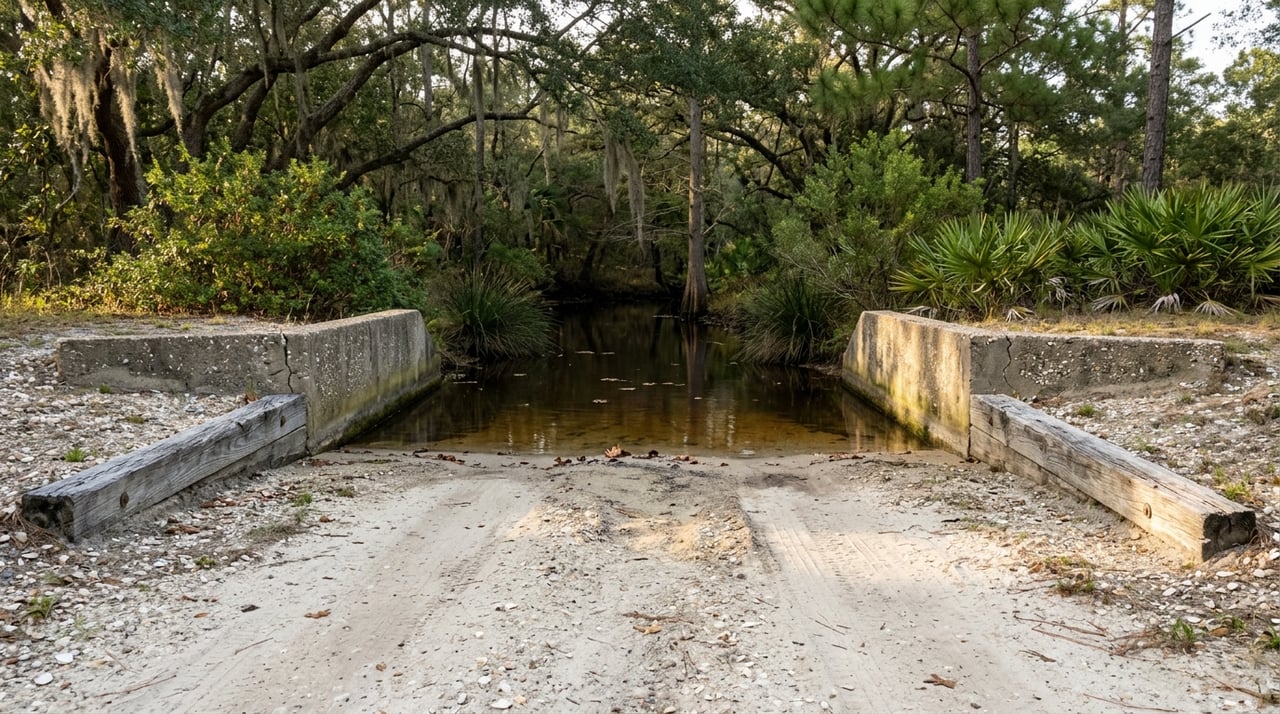
What to Know About Woodbine GA Riverfront Land
May 7, 2026
May 7, 2026
Dreaming about a riverfront homesite or a few quiet acres near Woodbine? The setting can be beautiful, but rural land here often needs more research than buyers expect. If you are considering acreage or waterfront property near the Satilla River, it helps to know how flood risk, zoning, access, utilities, and wetlands can affect what you can actually do with the land. Let’s dive in.
Near Woodbine, two properties that look similar online can function very differently in real life. Camden County describes this area as low-lying coastal plain, with flooding possible from surrounding rivers and hurricanes, so details like elevation, drainage, and storm-surge exposure can vary from tract to tract.
That is why acreage buyers should avoid making assumptions based on a general area or nearby homes. Instead, you want to evaluate the exact parcel, including its flood information, legal access, utility options, and any recorded easements or survey issues.
One of the first questions to answer is whether the property is inside Woodbine city limits or in unincorporated Camden County. That distinction matters because Woodbine property-use applications are reviewed by the city’s Planning Commission, while county parcels are handled through Camden County Planning & Development.
This early step can save time and confusion. Before you move too far into due diligence, confirm which jurisdiction governs the tract so you know where zoning, permitting, and development questions should go.
In unincorporated Camden County, the A-F district is intended for crops, livestock, poultry, and forestry. It generally requires 3 acres, including 1 upland acre with soils suitable for an on-site sewage management system.
This zoning also reflects a more rural setup. Camden County states that utilities other than electricity and telephone should generally be provided by the land user in A-F areas, rather than relying on extension of public water and sewer.
The A-R district is designed for small farms with residences and compatible uses. It generally requires 2 acres, including 1 upland acre with suitable septic soils, and it uses larger setbacks than a typical subdivision lot.
For buyers who want a mini-farm, guest structures, or a more private homesite, this can be appealing. Still, you need to confirm both zoning and soil suitability before assuming the property will support your plans.
Rural acreage is not the same as a platted lot in a utility-served neighborhood. Camden County’s code allows much smaller lot sizes in districts like R-1 when public or community water and sewer are available, including 10,000 square feet in that utility-served setting.
That contrast is important. If you are comparing acreage near Woodbine to more conventional residential property, larger lot requirements, septic considerations, and wider setbacks may shape where and how you can build.
A beautiful tract does not help much if legal or practical access is unclear. Camden County says a buildable lot must have at least 25 feet of frontage on a street that provides vehicular access, whether that is a public street, publicly maintained street, private street, or an approved easement to a public street.
You also need to verify how access works on the ground. On rural land, it is wise to review the deed, survey, plats, and any recorded easements rather than relying on a gravel path or longstanding local use.
If the property fronts a county road or county-maintained road, Camden County requires a driveway permit before installing a driveway or other means of ingress and egress. Public Works inspects the site and determines culvert size.
That means your driveway plan may involve more than picking a location that looks convenient. Drainage, roadside conditions, and permit requirements can directly affect cost and timing.
Road maintenance deserves just as much attention as legal access. Camden County maintains a broad road network, including public unpaved roads and culverts, but buyers should still verify whether a road is publicly maintained, privately maintained, or simply used informally.
That question can shape your long-term ownership experience. Before closing, make sure you understand who is responsible for maintenance and whether that arrangement is documented.
On acreage near Woodbine, utility service can vary widely by parcel. The City of Woodbine states that new water and sewer service requires an application, and electrical service may come from Georgia Power or Okefenokee REA depending on the location.
In rural agricultural areas, public utility extension may not be realistic. That makes early utility research essential, especially if you are budgeting for a custom home, barn, workshop, or future improvements.
For new construction, Camden County says a newly built home or mobile home must provide an approved on-site sewage inspection report. The county’s development rules also require review of on-site sewage plans or public-system sewer plans before land development can move forward.
In simple terms, the land has to work for septic if sewer is not available. That is one reason upland acreage and suitable soils matter so much when you are buying rural property.
Riverfront and low-lying land near Woodbine deserves careful flood review. Camden County participates in the National Flood Insurance Program, and the county directs buyers to flood information resources, including Base Flood Elevation requests and flood-zone determination letters.
You should also review FEMA flood maps for the specific parcel. Camden County’s GIS resources include flood information and potential storm-surge maps, which can be especially useful when evaluating property near the Satilla River.
Camden County states that flood insurance is mandatory for structures in a Special Flood Hazard Area when the loan is federally backed. The county also notes that flood insurance policies normally have a 30-day waiting period.
That timing matters if you are close to closing. It is smart to review flood-zone status and likely insurance needs early, not at the last minute.
There is some positive news for buyers in unincorporated Camden County. The county says residents receive a 20% flood-insurance premium discount through the Community Rating System.
That does not remove flood risk, of course, but it can be part of the budgeting picture when you are comparing riverfront or low-lying properties.
A scenic river tract may include regulated areas that affect clearing, grading, filling, or building. The U.S. Army Corps of Engineers Savannah District says a permit may be required for work in a river, stream, lake, or wetland, and a jurisdictional determination can help identify regulated aquatic areas on a property.
This matters even if your plans seem modest. A driveway, homesite pad, shoreline work, or clearing plan can all raise questions if wetlands or other regulated waters are present.
Georgia EPD guidance states there is generally a 25-foot buffer along banks of State waters, a 50-foot buffer for trout streams, and a 25-foot buffer along coastal marshlands. These buffers are measured horizontally from the point where vegetation has been wrested by normal stream flow or wave action.
For a buyer, that means not every attractive portion of a waterfront tract may be usable in the way you expect. It is important to identify regulated areas before finalizing a homesite, pasture layout, or clearing strategy.
Camden County requires a development permit before land-disturbing activity, including grading, clearing and grubbing, tree clearance, land development, or project construction. In other words, even limited clearing on a wooded tract may be regulated.
That is why due diligence should include both the dream and the reality. You want to know not just what looks possible, but what is actually permitted.
When buying acreage, paperwork matters as much as the view. Camden County real-property records are kept in the Clerk of Superior Court office, and the county notes that recorded plats and surveys must conform to Georgia technical standards.
Before you rely on boundary lines, access routes, or improvement locations, review the recorded survey, deed, plats, and easement documents. These records often answer the most important practical questions about how the parcel functions.
If you are considering acreage or riverfront land near Woodbine, focus on these items early:
Acreage can offer privacy, flexibility, and a strong sense of place, but it also asks more of a buyer. The due diligence is more detailed, and small parcel-level issues can have a big impact on value, usability, and long-term enjoyment.
That is where thoughtful guidance matters. If you are weighing a homesite, a riverfront retreat, or a larger land purchase near Woodbine, working with an advisor who values both lifestyle goals and property fundamentals can help you move forward with confidence.
If you are exploring distinctive property opportunities across Coastal Georgia, Georgia Bailey Usry offers the careful, high-touch guidance buyers need when every detail matters.



Georgia has achieved numerous accomplishments, primarily driven by her commitment to prioritizing her clients and maintaining a strong focus on building lasting relationships. Work with Georgia now!