Darien GA Waterfront Homes & Deepwater Buying Guide
April 2, 2026
April 2, 2026
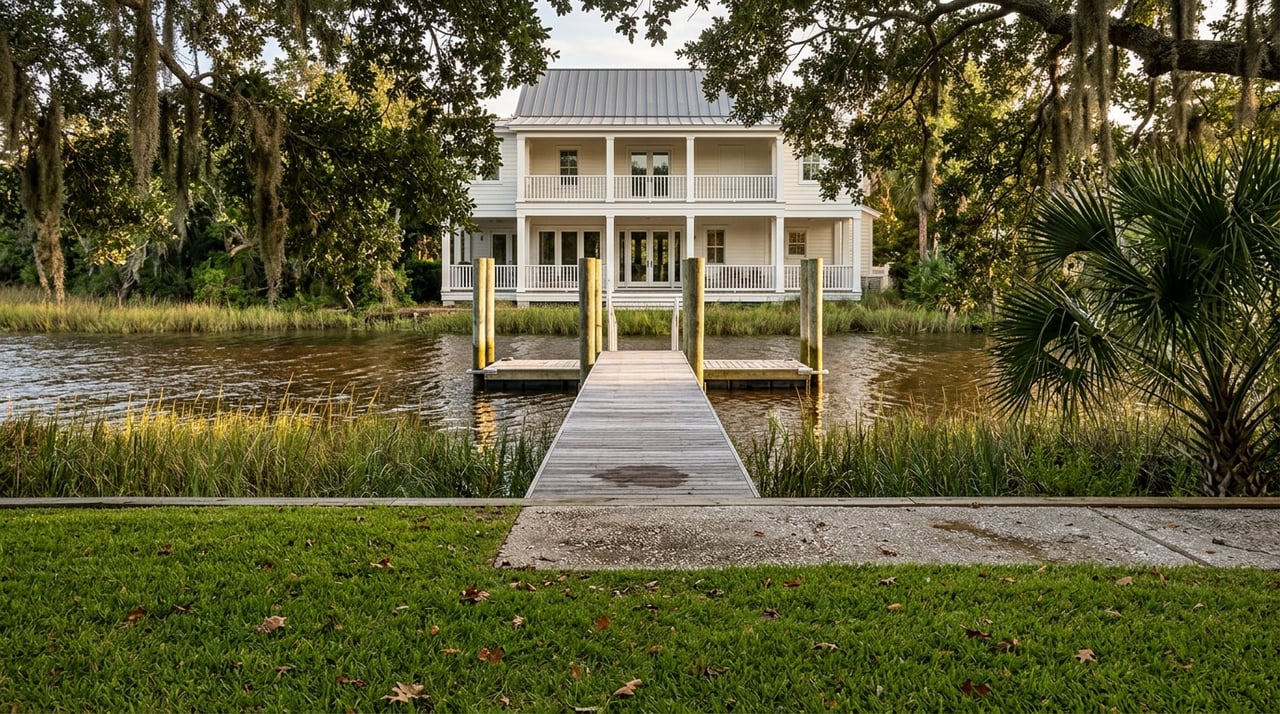
If you are looking at waterfront property in Darien, one question matters more than almost any other: what does the water actually do at low tide? In this part of coastal Georgia, a beautiful view does not always mean simple boating access, and a “deepwater” label should never be treated as automatic. This guide will help you understand how Darien’s river-and-marsh setting works, what deepwater really means here, and what to verify before you buy. Let’s dive in.
Darien’s waterfront identity is shaped by the Darien River, surrounding marshes, creeks, and estuaries, not by an open-beach setting. According to McIntosh County’s history overview, the area’s marshes and estuaries are highly productive habitat for fish, shellfish, and birds, and the riverfront itself includes docks, fishing access, and views of both pleasure boats and shrimp vessels.
This setting also connects to a much larger coastal system. NOAA’s Coast Pilot describes the Darien River as part of a network tied to the Altamaha River, the Intracoastal Waterway, nearby creeks, and Altamaha Sound. In other words, when you buy waterfront property here, you are buying into a tidal-marsh environment with real navigation, permitting, and access considerations.
In Darien, deepwater is a property-specific boating term, not a blanket description for every waterfront lot. Local waterways can be shallow, shoaled, and strongly affected by tides, so a home’s value for boaters often depends on the exact dock, the exact route out, and the type of vessel you plan to use.
NOAA notes that parts of the Darien River are shoaled and affected by floating snags, and that the best route from Doboy Sound into the river is via the Intracoastal Waterway. Georgia DNR also notes that coastal creeks and rivers in this region can see daily tides of roughly 6 to 9 feet, which can create steep drop-offs and low-tide loading issues at ramps, as explained in its coastal boating guidance.
For you as a buyer, the practical takeaway is simple: a true deepwater property should have usable water at the dock for your intended boat, at the tide stages you expect to use it, with a workable route to wider navigable water.
Tides are not a minor detail in Darien. They can directly affect whether you can leave the dock comfortably, load passengers safely, or return home without timing the water.
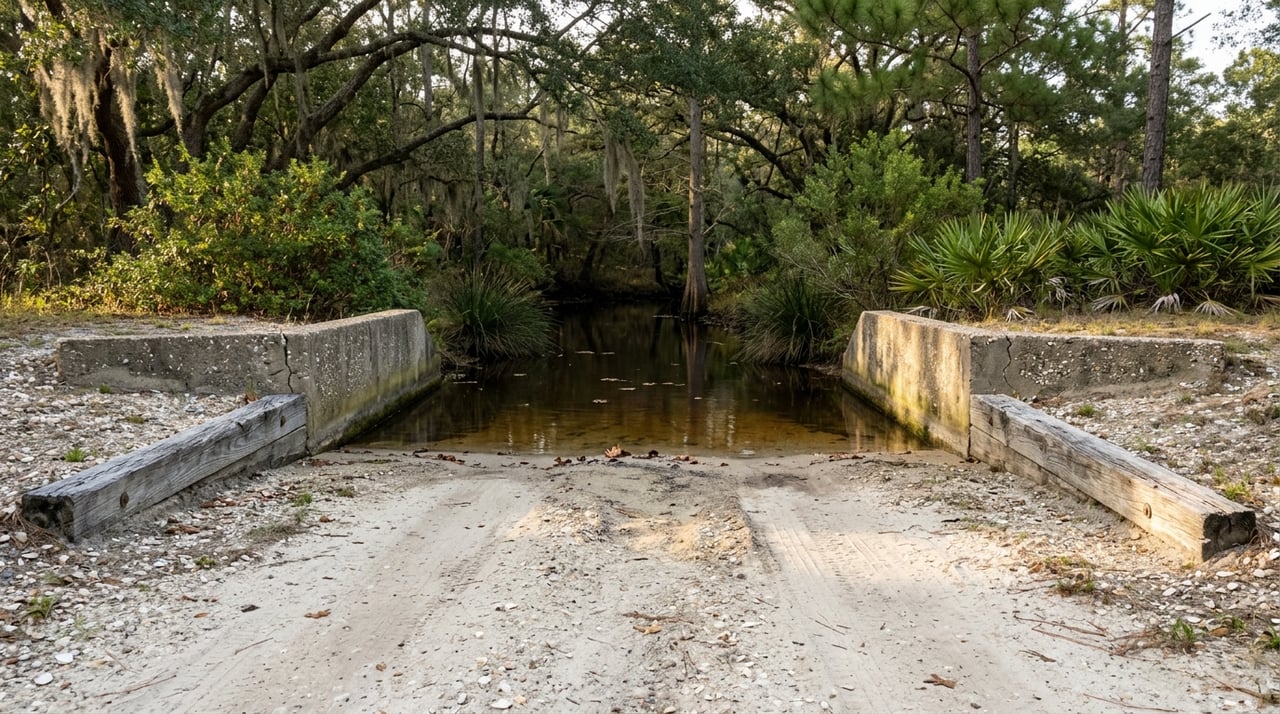
A helpful real-world example comes from Georgia DNR’s public materials on local dock work. In a DNR coastal update, officials noted that the Darien River boat-ramp service dock needed a longer gangway so the floating dock would not sit on the bottom at low tide. That reinforces why buyers should look beyond listing language and ask very specific access questions.
Before you move forward on any Darien waterfront or marsh-front property, ask:
One of the biggest misconceptions in tidal markets is that waterfront automatically means dock-friendly. In Darien, that is not always the case.
McIntosh County’s zoning ordinance makes clear that waterfront conservation is a major county priority. The ordinance states that all saltwater marsh areas fall within the Conservation Preservation district, with boundaries tied to the National Wetlands Inventory and Georgia DNR.
That matters because the presence of marsh, shoreline constraints, and district rules can affect whether a dock is allowed, where it can be placed, and how much of the lot is actually usable.
The county ordinance allows a private boat dock or boat house as an accessory use for a dwelling, but that does not mean every lot will qualify in practice. Accessory structures still must meet district setbacks and related requirements, and reviews can involve natural features like watercourses, floodplain, stormwater planning, and utility provisions.
For waterfront buyers, this means you should separate three different ideas:
Those are not always the same thing.
Another key point in Darien is that there is no single standard lot size for waterfront property. McIntosh County’s ordinance shows major differences by district, including examples such as 3 acres in A-R residential agriculture, 1 acre in R-1 single-family residential, 2 acres in the CP conservation-preservation district, and 21,780 square feet in the Hog Hammock district.
For buyers, the more important issue is often not gross acreage but effective buildable area. Marsh edges, floodplain limits, soils, setbacks, and shoreline regulations can reduce the portion of a parcel that is actually practical for a home site, driveway, septic or utilities, and dock access.
A larger waterfront parcel may sound ideal on paper, but in a tidal environment, some of that land may be constrained by environmental or zoning factors. That is why two properties with similar acreage can offer very different real-world use.
When you compare homesites, it helps to focus on:
Darien appeals to many buyers because it offers a quieter waterfront lifestyle within coastal Georgia’s boating network. Instead of a beach-town pattern, the draw here often centers on river access, marsh views, shrimping heritage, inshore boating, fishing, and a more tucked-away feel.
McIntosh County highlights local access points including Darien Waterfront Park, Blue & Hall Marina, Barrington County Park, and other launch locations. The county also notes temporary construction impacts at Champney River Park, while Georgia DNR describes renovations at Altamaha WMA/Champney River Park that include new ramps, a raised parking lot, and a rebuilt service dock designed to better handle sea-level and stormwater issues.
This access infrastructure matters because it supports the way many owners actually use the area, whether that means skiffs, fishing runs, creek exploration, or reaching broader coastal waters.
If you are comparing Darien with the larger Golden Isles region, it helps to think of Darien as part of the same coastal ecosystem, but with a different feel. The Golden Isles visitor overview focuses on Brunswick, St. Simons Island, Sea Island, Jekyll Island, and Little St. Simons Island as the core destinations.
Darien, by contrast, offers a historic river setting with access to the same broader tidal-marsh and barrier-island geography. For some buyers, that quieter river-based setting is exactly the appeal.
Because waterfront value in Darien is so tied to use, your search should start with your goals. A buyer who wants scenic marsh views may have a different ideal property than a buyer who needs dependable dock access for a specific boat.
As you narrow options, focus on verification more than assumptions.
Use this checklist when evaluating homes or land in Darien:
Confirm the water access type
Is the property on riverfront, creek frontage, marsh frontage, or another tidal setting?
Check tide sensitivity
Ask how the dock or shoreline performs at low tide and high tide.
Review navigation realities
Use NOAA navigation references to understand shoaling, route conditions, and channel access.
Verify dock and permit status
Confirm whether existing structures were properly permitted and whether future improvements may need review.
Study zoning and district rules
Look at the applicable McIntosh County zoning standards for setbacks, district limits, and use requirements.
Measure buildable area, not just lot size
Understand how much of the parcel is truly usable for your plans.
Match the property to your boat
A shallow-draft skiff and a larger vessel may require very different conditions.
In a market like Darien, waterfront buying is rarely just about the home itself. It is also about water depth, marsh-edge regulations, access routes, timing, and how the property will function for the lifestyle you want.
That is where careful guidance can make a major difference. When you work with an advisor who understands both the broader Golden Isles market and the details that affect waterfront value, you can approach the process with more clarity and fewer surprises.
If you are exploring waterfront opportunities in Darien or comparing them with other coastal options in the region, Georgia Bailey Usry can help you evaluate the details that matter most and make a more informed move.

Georgia has achieved numerous accomplishments, primarily driven by her commitment to prioritizing her clients and maintaining a strong focus on building lasting relationships. Work with Georgia now!